

Preventing Overdose
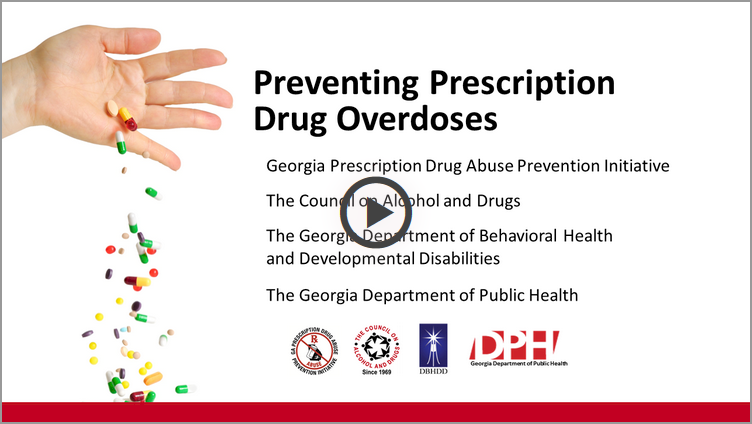
Preventing Prescription Drug Overdoses has been designed to educate your community on the dangers of prescription drug overdoses: accidental or intentional . In this presentation, you will find steps that you can take to prevent overdoses and where to go if You, a Friend or a Loved one Needs Help.
The content was developed for anyone that is at risk of an overdose and their families.
This educational video runs 26 minutes 28 seconds.
SAMHSA Opioid Overdose Prevention Toolkit
CLICK HERE for SAMHSA’s 24 page Opioid Overdose Prevention TOOLKIT that contains Opioid Use Disorder Facts, Five Essential Steps for First Responders, Information for Prescribers, Safety Advice for Patients & Family Members, and information on Recovering From Opioid Overdose.
Preventing Overdose Deaths
There are actions we all can take to help prevent intentional and unintentional overdose deaths. The first step is to learn the symptoms of an overdose and respond quickly. Most overdoses occur as the result of the use of an opioid drug. If you see the following symptoms: Extremely pale face and/or feels clammy to the touch; Limp body; Purple or blue-like color to the fingernails or lips; Vomiting or making gurgling noises; In a coma-like state (not able to be awakened or unable to speak); Either slow or no heartbeat or breathing.; you likely are witnessing an overdose. Take the following actions.
- Dial 911 immediately as an overdose can result in death or severe brain injury.
- If available dispense Naloxone immediately.
- Do CPR if the person is not breathing or breathing very slowly and continue CPR until emergency service personnel arrive.
Naloxone is a medication that is approved by the FDA to reverse an opioid overdose by blocking opioid receptor sites and reversing respiratory depression. This medication is available as an injectable, intranasal spray, and autoinjector. Naloxone is effective at reversing an overdose if the overdose is caused from opioids or opioids in combination with non-opioid drugs such as sedatives or stimulants. However, if an overdose is caused by non-opioid
drugs including benzodiazepines or stimulants WITHOUT opioids, naloxone will not work. Naloxone can be obtained by contacting a local pharmacy, doctor, healthcare provider, or substance abuse treatment facility. It is important to learn how to administer Naloxone.
Normalize calling 911 in the event someone suspects a person is experiencing an overdose. 911 Good Samaritan law vary across the U.S., but each one is written with the goal of reducing barriers to calling 911 in the event of an overdose. This type of legislation can provide overdose victims and/or overdose bystanders with limited immunity from drug-related criminal charges and other criminal or judicial consequences that may otherwise result from calling first responders to the scene. Keep in mind that the first and most important step to take in saving the life of a person who is overdosing is to get them breathing again. If naloxone is not available, then CPR training is so valuable. If you are trained and comfortable doing so, you can do rescue breathing and/or chest compressions until the person overdosing wakes up. Rescue breathing and chest compressions, even with a breathing mask, may carry a risk for COVID-19 transmission, however, these techniques when correctly done can save lives, particularly if naloxone is not available.
Additional prescription drug abuse prevention measures include secure disposal. If any of your prescription drugs are expired, they should be disposed of in the correct way. Expired medication in most cases is not safe or effective to use. To dispose of expired or medicine/prescription drugs not needed to not pollute your water supply use one of the 240+ Drug Drop Boxes across the state in your local law enforcement or pharmacy-maintained drug drop box. To locate the nearest Drug Drop Box location, visit this website: http://prescriptiondrugdisposal.com/. Also, if you know of a Drug Drop Box that is not in the Directory, please email John Bringuel at jbringuel@Livedrugfree.org and he will work to get the location included in the Statewide Directory.
To learn more about Prescription Drug Misuse, Abuse, Addiction, and Overdose Prevention click HERE or visit this link https://www.canva.com/design/DAEsoWlSwoA/lxH1iCay21fKNhIqoZfN9g/view?utm_content=DAEsoWlSwoA&utm_campaign=designshare&utm_medium=link&utm_source=sharebutton#1.
Secure storage is just as crucial as proper disposal. It is essential to keep all medications, particularly prescription narcotics such as morphine, opioids, and codeine, stored safely in a lockable container, out of reach of children, guests, and pets. These painkillers are among the most frequently misused prescription drugs, contributing to over 75% of overdose fatalities. If you would like to join the Georgia Prescription Drug Abuse Prevention Initiative Collaborative in supplying Medicine Safes to at-risk or vulnerable groups, please contact John at jbringuel@livedrugfree.org.
Abuse of these opioid-based drugs can lead to dizziness, sedation, weakness, sweating, and more. One high dose of an opioid drug can depress breathing and lead to coma, or death. Abruptly stopping opioid use can lead to withdrawal symptoms—including restlessness, vomiting, diarrhea, pain, and chills. Safe storage of these controlled medications is especially important, as they can be extremely dangerous if taken when not prescribed or not as prescribed.
Prescription Drug Addiction
Anyone who takes prescription opioids can become addicted to them. Opioid use disorder (OUD), often referred to as “opioid addiction,” occurs when attempts to cut down or control opioid use are unsuccessful, or when use results in social problems and a failure to fulfill obligations at work, school, and home. To avoid prescription drug addiction, the Centers for Disease Control (CDC) recommends talking to your doctor about ways to manage your pain that do not involve prescription opioids. Some of these options may work better and have fewer risks and side effects. Depending on the type of pain you are experiencing, options may include:
- Acetaminophen (Tylenol®) or ibuprofen (Advil®)
- Cognitive behavioral therapy—a psychological, goal-directed approach in which patients learn how to modify physical, behavioral, and emotional triggers of pain and stress
- Exercise therapy, including physical therapy
- Medications for depression or for seizures
- Interventional therapies (injections)
- Exercise and weight loss
- Other therapies such as acupuncture and massage
If opioid-based drugs are the only option available for pain treatment, talk to your doctor about your medical and mental health history, any medications you are taking, and if you or anyone in your family has a history of substance misuse or addiction. Never take opioids in higher amounts or more often than prescribed. Also ask about the serious side effects (like excessive sleepiness or craving more of the medication), so you and your family know when to call a doctor or go to the hospital. Always let your doctor know about any concerns you may have about taking prescription medicines. Tell your doctor if you continue to experience pain while taking opioids and discuss other ways to reduce your pain.
Please feel free to share with your network and visit https://prescriptiondrugdisposal.com/ and https://stoprxabuseinga.org/ to learn more about Rx Drug Misuse, Abuse, Addiction and Overdose.
Additional Resources
The SAMHSA Overdose Prevention and Response Toolkit is a good resource as it provides guidance on preventing and responding to an overdose. It also emphasizes that access to treatment is an essential aspect of overdose prevention. The toolkit, designed to augment overdose prevention and reversal training, provides guidance on the role of opioid overdose reversal medications, including naloxone and nalmefene, and how to respond to an overdose. In addition it contains appendices for specific audiences, including people who use drugs (PWUD), people who take prescription opioids, first responders, healthcare practitioners, and others. The toolkit is in the public domain and can be downloaded at: https://store.samhsa.gov/sites/default/files/overdose-prevention-response-kit-pep23-03-00-001.pdf.
SAMHSA also provides information on how to prevent opioid overdose. Topics include: What is Opioid Overdose?, How to Prevent Opioid Overdose., How to Recognize Opioid Overdose., How to Treat Opioid Overdose. This publication can be viewed at: https://www.samhsa.gov/substance-use/treatment/overdose-prevention.
Naloxone - FDA-approved medication that can reverse an opioid overdose in just minutes
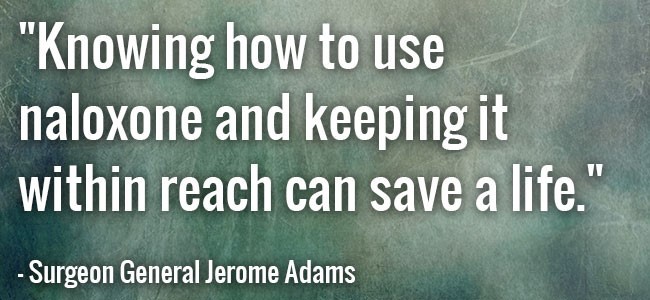
You’ve probably heard of naloxone -- the FDA-approved medication that can reverse an opioid overdose in just minutes. But did you know that by carrying naloxone, and understanding how and when to use it, you can save a life?
Here are four things you need to know about naloxone right now:
1. Naloxone is safe.
Also known by its brand names Narcan or Evizo, Naloxone is safe and FDA-approved. In fact, United States Surgeon General Jerome Adams has issued an advisory urging the public to carry naloxone, and to be prepared to use it.
2. Naloxone does not increase drug use.
Some have suggested that if naloxone were viewed as a safety net, it would encourage people to use more opioids. Several studies have demonstrated that this is simply not true. Increased naloxone access has shown no increase in opioid misuse or overdoses.
3. Naloxone should be used as soon as you see the signs of an overdose.
Timing is everything. In the event of an overdose, the sooner naloxone is administered, the more successful it will be in reviving the person who is overdosing.
Some common signs of an opioid overdose include pinpoint pupils, breathing problems, unresponsiveness, blue or gray lips and gurgling. If you see the signs and believe someone is overdosing, acting quickly is critical.
4. Anyone can obtain and carry naloxone. In fact, most major pharmacies - including Walmart, CVS, and Walgreens - carry naloxone.
When someone is saved from an opioid overdose, they have the chance to get the treatment they need and to begin recovery. At Shatterproof, we know that everyone deserves that chance.
DBHDD Opioid Public Education Plan
This was the PSA that DBHDD produced as a part of their Opioid Public Education Plan.

Opioid Overdose Rescue: 3 STEPS TO SAVE A LIFE by OpioidOverdoseRescue.com
Overdose is a medical emergency. Signs of overdose include being unresponsive, making gurgling/snore-like sounds, breathing that is very slow, shallow, or the person is not breathing at all. The victim’s face make be pale or ashen, fingernails and lips may be blue and the heartbeat may be slow, erratic or non-existent. If you have reason to suspect opioid overdose, your quick action can save a life.
You can help lower the tragic death rate from drug overdose by learning the Three Steps to Save a Life, and telling your friends and family members to do the same.
Learning these Three Steps is especially important if:
- Someone you know is taking opioid pain medications or using illegal opioids
- Someone you know is recovering from opioid addiction, because if the person relapses, his or her tolerance will be less so the person is at a greater risk of overdose
Many states, like Georgia, have Medical Amnesty Laws which can give amnesty from arrest for both the caller and the victim in the case of a medical emergency, so don’t be afraid to call for help.
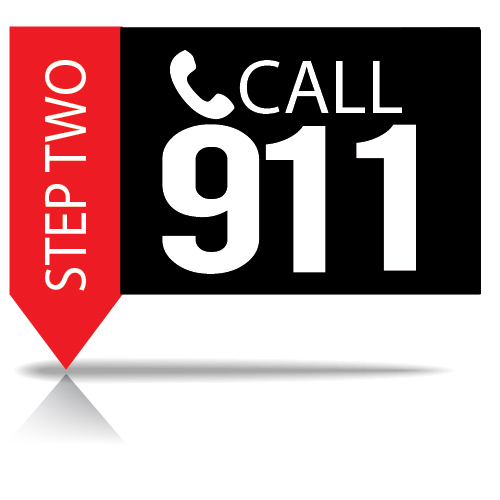
Many states have made Naloxone available without an individual prescription. Ask for it at your local pharmacy.
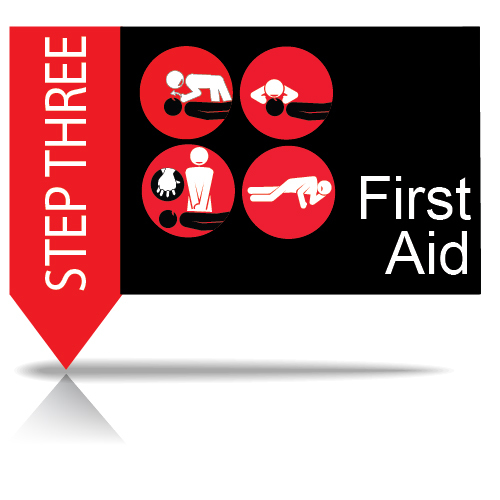
Rescue breathing and chest compressions can keep oxygenated blood flowing. Good Samaritan laws protect the good faith efforts of those trying to save a life in an emergency. Just do your best.
Georgia Overdose Prevention & The Good Samaritan 911 Fatal Overdose Prevention Law and Naloxone
Georgia Overdose Prevention is a grassroots organization comprised of parents, healthcare professionals, harm reduction advocates and friends of those who have lost loved ones to accidental drug overdose. Our group was formed to create and advocate for the passage of the Georgia 911 Medical Amnesty Law.
Our initial goal was achieved when Governor Nathan Deal signed into law Georgia House Bill 965 on April 24, 2014. This common-sense law, sponsored by Representative Sharon Cooper and Senator Renee Unterman, provides protection for people who call 911 and seek medical assistance for someone experiencing a drug or alcohol-related overdose. The caller and the victim cannot be arrested, charged, or prosecuted for small amounts of drugs, alcohol, or drug paraphernalia if the evidence was obtained as a result of seeking medical assistance.
The law also increases access to the opioid overdose “antidote” naloxone, also called Narcan. Physicians may prescribe naloxone to a family member, friend, or other person in a position to assist someone at risk of opioid overdose, and to first responders, harm reduction organizations, and pain management clinics. Pharmacists are permitted to dispense naloxone under that prescription. The physician, pharmacist, and person administering naloxone are immune from civil, criminal, and professional liability as long as they act in good faith and in compliance with the applicable standard of care. The timely administration of naloxone typically reverses the effects of opiates such as heroin and opioids like hydrocodone, oxycodone, methadone and others. Victims of opioid overdose who receive naloxone in time are less likely to die or suffer long-term brain or tissue damage.
Inspired by the lives that have been saved by the passage of the Medical Amnesty Law, Georgia Overdose Prevention is now focused on education, implementation and development of resources for Georgia's 911 Medical Amnesty Law.
To learn more about Preventing Prescription Drug Overdoses watch this informative presentation!
Good Samaritan 911 Fatal Overdose Prevention Law and Naloxone
Did you know that accidental overdose deaths are the leading cause of accidental death in the United States? Accidental overdose deaths exceed even motor vehicle accidents in people 25 to 64. Many of these deaths would have been preventable if emergency medical assistance were to have been summoned. But people using drugs or alcohol illegally often fear arrest if they call 911, even in cases where they need emergency medical assistance for a friend or family member who may have overdosed. The best way to encourage an overdose witness to seek medical help is to exempt them from arrest and prosecution for minor drug and alcohol law violations, an approach often referred to as Good Samaritan 911 law.
Obituaries narrate lives lost to the opioid epidemic By David Armstrong
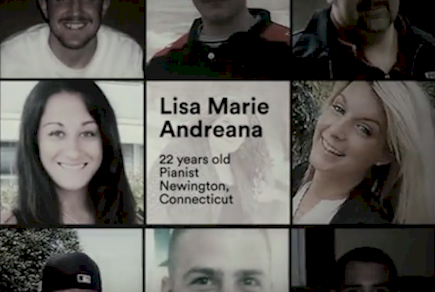
52 weeks, 52 faces
The faces above and the stories below are a snapshot of the devastating opioid epidemic sweeping across the United States. Publicly acknowledging that a family member suffered from an addiction to drugs, or died of an overdose, has long been a taboo subject — one best kept secret among family and a few knowing friends. That is changing.
As the death toll from the opioid crisis mounts, families are increasingly weaving desperate warnings into the obituaries of loved ones about the horror that can result when people abuse painkillers, heroin, and synthetic drugs such as fentanyl.
Fentanyl-related overdoses , prescription and illegal, has more than quadrupled over the last three years in Georgia
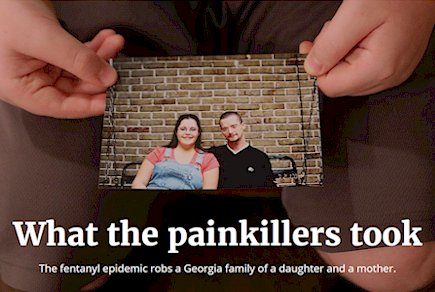
Somebody help me!
Pat Strickland was about to watch a movie in the den of her Gwinnett County home two years ago, when she heard her 11-year-old grandson screaming upstairs.
She rushed up the ten carpeted steps to her daughter’s bedroom and found her slumped over on the edge of her bed, a needle and syringe between her legs. Pat scrambled to resuscitate the mother of two, filling her lungs with air. But it was too late. Stephanie Futrell’s lips had already turned blue. Pat knew her 33-year-old daughter — once a fun-loving Phoenix High School graduate who aspired to be a journalist — had finally succumbed in her years-long drug addiction.
From 1999 - 2014, the number of middle-aged white women dying annually from opiate overdoses shot up 400 %.

Between 1999 and 2014, the number of middle-aged white women dying annually from opiate overdoses shot up 400 percent, according to a Washington Post analysis of data from the Centers for Disease Control and Prevention. Anti-anxiety drugs known as benzodiazepines contributed to a growing share of the 54,000 deaths over that period, reaching a third in the last several years, The Post found, though spotty reporting in death records makes it likely that the combination is even more widespread.
Both drugs depress the central nervous system, temporarily easing pain and anxiety while suppressing respiration, heart rate and the gag reflex. Alcohol has the same effect, and combining any of these can be fatal.
READ THE FULL WASHINGTON POST STORY >>
Community Anti-Drug Coalitions of America’s (CADCA) Online Rx Abuse Prevention Toolkit
CADCA has done it again! They have produced another great toolkit. Below click a link for one of six pdfs in this toolkit. What a beautiful toolkit to use when attempting to prevent opioid-related overdoses and deaths. This toolkit equips health care providers, communities and local governments with material to develop practices and policies to help prevent opioid-related overdoses and deaths. Addresses issues for health care providers, first responders, treatment providers, and those recovering from opioid overdose.
Document 1: SAMHSA Opioid Overdose Prevention TOOLKIT: Summary Document
Document 2: SAMHSA Opioid Overdose Prevention TOOLKIT: Facts for Community Members
Document 3: SAMHSA Opioid Overdose Prevention TOOLKIT: Five Essential Steps for First Responders
Document 4: SAMHSA Opioid Overdose Prevention TOOLKIT: Information for Prescribers
Document 5: SAMHSA Opioid Overdose Prevention TOOLKIT: Safety Advice for Patients & Family Members
Document 6: SAMHSA Opioid Overdose Prevention TOOLKIT: Recovering From Opioid Overdose – Resources for Overdose Survivors & Family Members
Medical Association of Georgia Foundation (MAGF)
Dr. P. Tennent Slack, M.D., is a pain medicine physician and the chairman of the Statewide Program Committee for the 'Think About It' campaign. Dr. Slack works for the Northeast Georgia’s Physicians Group (NGPG) since 2012. Dr. Tennent Slack has been practicing medicine for over 24 years. A native of Gainesville, Georgia, Dr. Slack's philosophy of care is "to provide patients with excellent medical care, treating them the way I would want to be treated." Below please find Dr. Slack’s “Six point checklist to more discriminating opioid prescribing”.
The “6 Point Checklist to More Discriminating Opioid Prescribing” below is intended for use by physicians and members of their patient-care teams. If you would like to speak with Dr. Slack please email him at ptslack@gmail.com.
6 Point Checklist to More Discriminating Opioid Prescribing
1. How definable is the source of pain?
2. SCREEN for risk of addiction
3. Consider ALL treatment options
4. If opioids are prescribed:
- LOWEST effective dose
- LOWEST number of pills
Be aware of Georgia 9-1-1 Medical Amnesty Law
5. EDUCATE the patient (Sharing opioid medications is ILLEGAL)
6. MONITOR the patient for misuse /diversion
- Drug screen / pill counts
Dr. Tennant Slack, MD, of Northeast Georgia Physician’s Group

- Doctorate of Medicine, Emory University School of Medicine
- Residency, Anesthesia, Emory University School of Medicine
- Fellowship, Pain Medicine, Medical College of Georgia
- Board Certified, American Board of Anesthesiology - Pain Medicine